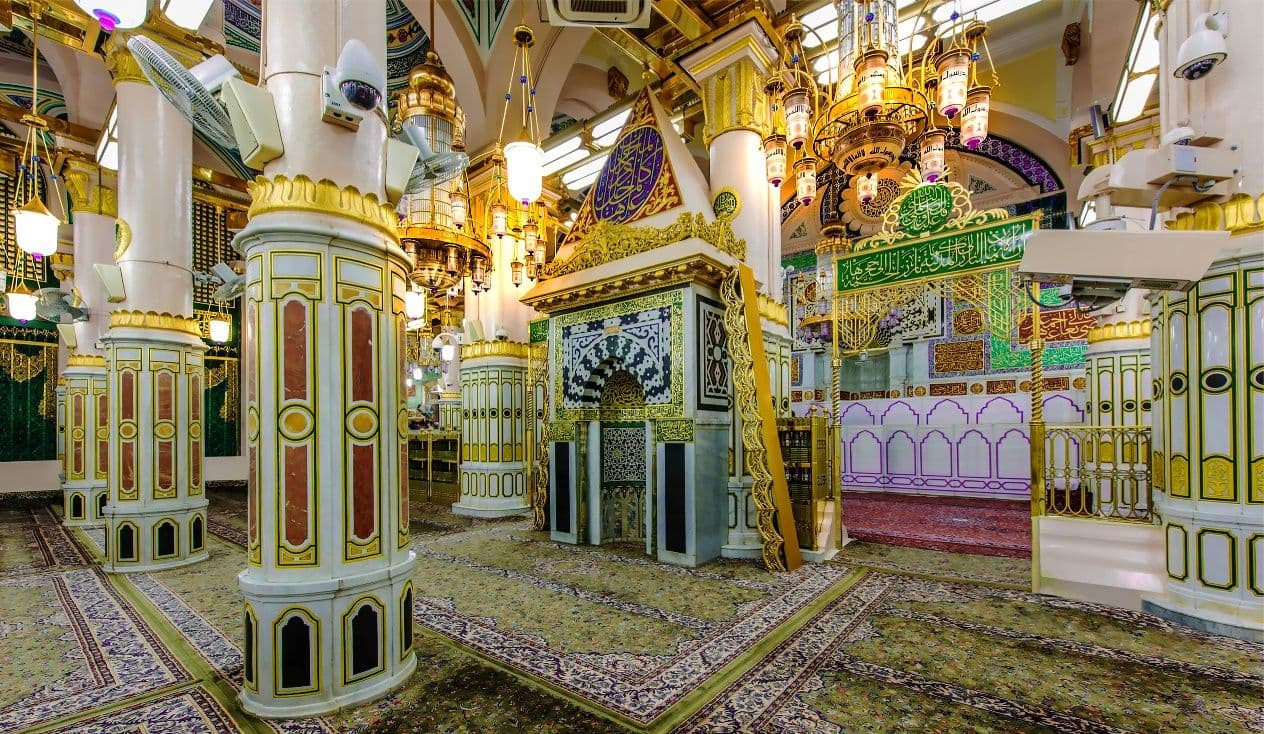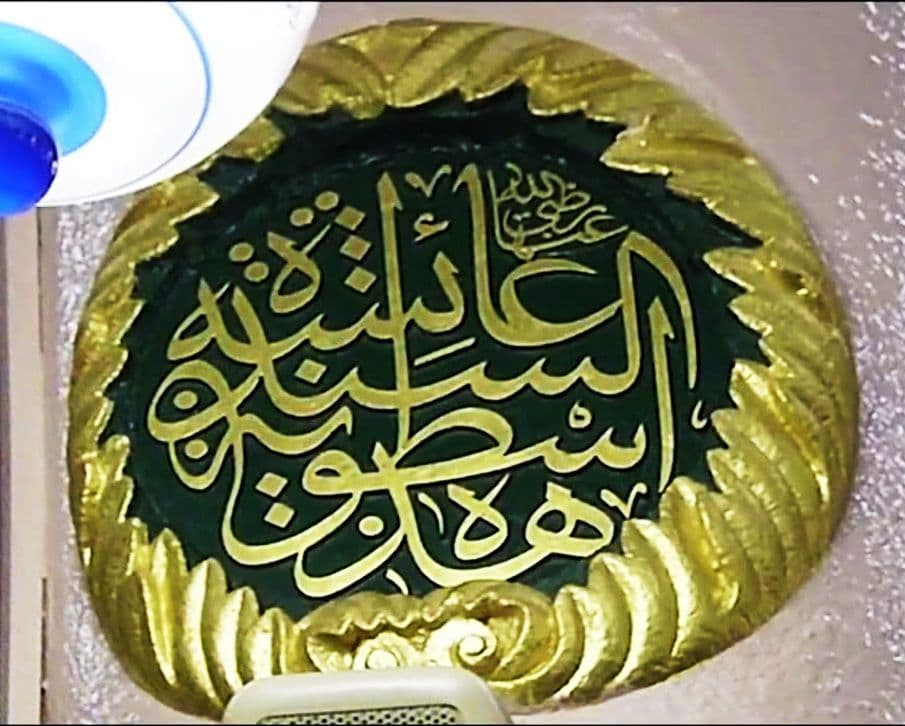


How can the fact that the Companions of the Prophet ﷺ kept watch over him in order to protect him be reconciled with the words of Allah: “And Allah will protect you from the people” (5:67)? According to al-Bukhāriyy: I heard ʿĀʾishah say: The Prophet ﷺ remained awake after arriving in Medina, and he said: “If only a man from among my righteous Companions would guard me tonight.” We then heard the sound of a weapon. He asked: “Who is it?” Someone replied: “I am Saʿd ibn Abī Waqqāṣ. I have come to stand guard over you.” The Prophet ﷺ then fell asleep. The Companions continued to protect the Messenger of Allah ﷺ for a long period. The place where the guard would take up his position, by the door of the Prophet’s apartment, then became known as the Pillar of the Guards or the Pillar of the Guardian. This pillar is located to the left of the exit from the Prophet’s apartment. The Companions continued to protect the Messenger of Allah ﷺ until the words of Allah were revealed: “And Allah will protect you from the people.” According to al-Thirmidhī, ʿĀʾishah reported: The Prophet ﷺ was protected by his Companions until the verse “And Allah will protect you from the people” was revealed. The Prophet ﷺ then put his head out of the dome and said to them: “O people, leave, for Allah protects me!”
When was this verse from Sūrat al-Māʾidah—the Table Spread—revealed?
Ibn Ḥajar said in Fatḥ al-Bārī: I mentioned in the chapter entitled “Protection,” in the section entitled “The Book of Jihad,” that the Prophet ﷺ was no longer guarded after the revelation of the previous verse, according to al-Tirmidhī. However, several reports mention that the Prophet ﷺ was guarded during the battles of Badr, Uḥud and al-Khandaq, on his return from Khaybar at Wādī al-Qurā, during ʿUmrat al-Qaḍāʾ, and at the Battle of Ḥunayn. It therefore appears that this verse was revealed after the Battle of Ḥunayn. This is confirmed by what al-Tabarānī reports from Abū Saʿīd: al-ʿAbbās was among those who protected the Prophet ﷺ before the revelation of this verse, whereas al-ʿAbbās only joined the Prophet ﷺ after the conquest of Mecca.
Among those who protected the Prophet ﷺ were: ʿAlī, Saʿd ibn Muʿādh, Muḥammad ibn Maslamah, al-Zubayr, Abū Ayyūb, Dhakwān ibn ʿAbd al-Qays, al-Adrāʿ al-Sulamiyy and his son Mihjān, ʿAbbād ibn Bishr, al-ʿAbbās and Abū Rayḥānah. Some of them are known to have been the Prophet’s exclusive bodyguards, as was the case with Abū Ayyūb on the return journey from the Battle of Khaybar, when the Prophet ﷺ married Ṣafiyyah. Others took part in collective protection during expeditions, such as Anas ibn Abī Marthad. And Allah knows best.
Important note:
Allah protected His Messenger and shielded him from people in several situations even before the revelation of this verse, and there were several attempts to assassinate the Prophet ﷺ before this verse was revealed:
- Abū Jahl’s attempt in Mecca:
According to the authentic collection of Muslim, Abū Hurayrah relates the following account: “Abū Jahl said: ‘Does Muḥammad continue to drag his face along the ground when he is among you?’ He was told that he did. He added: ‘By al-Lāt and al-ʿUzzā! If I see him doing that again, I will trample on his neck and cover his face with dust!’ He then headed towards the Prophet ﷺ, who was in prostration, intending to trample on his neck. But he suddenly drew back, covering his face with his hands. The people asked him: ‘What is wrong with you?’ Abū Jahl replied: ‘Between him and me there is a trench of fire, something terrifying, and wings.’ The Prophet ﷺ later said concerning this event: ‘Had he come closer to me, the angels would have seized him violently, limb by limb.’” Allah then revealed verses 6–17 of Sūrat al-ʿAlaq concerning Abū Jahl.
-
The plot of the Quraysh at the House of Assembly, explained in verse 30 of Sūrat al-Anfāl: “Remember when those who disbelieved plotted against you to imprison you, assassinate you, or banish you. They plotted, but Allah caused their plot to fail, and Allah is the best of planners.”
-
The protection granted by Allah to the Prophet ﷺ in the Cave of Thawr, mentioned in verse 40 of Sūrat al-Tawbah: “If you do not support him... Allah had already supported him when those who disbelieved had driven him out, the second of two. When they were in the cave and he said to his companion: ‘Do not grieve, for Allah is with us.’ Allah then sent down upon him His serenity, ‘His sakīnah,’ and supported him with soldiers—Angels—whom you did not see. He thus brought low the word of those who disbelieved, while the word of Allah had the upper hand. And Allah is Mighty and Wise.”
-
The attempt of Surāqah ibn Mālik during the Prophet’s ﷺ emigration.
-
The attempt of ʿUmayr ibn Wahb, recounted in several collections when mentioning the reason for ʿUmayr’s conversion.
-
The attempt of the Banū al-Naḍīr to poison the Prophet ﷺ at Khaybar.
-
The attempt of the hypocrites on the return journey from the Battle of Tabūk.
-
The attempt of the Bedouin.
All these attempts preceded the revelation of the verse. However, let us note the mercy of the Prophet ﷺ. He forgave all those who tried to assassinate him. It has not been established that he killed a single one of them for attempting to assassinate him. Despite the incessant attacks against him, our Prophet ﷺ stated, according to al-Bukhāriyy, that after being physically mistreated by his people, one of the Prophets exclaimed: “O Allah! Forgive them, for they do not know!” Some chronicles report that the Prophet ﷺ uttered the same words in response to the attacks coming from his people.
Let us also note that the verse concerns the protection of the Prophet ﷺ from people until the Day of Judgment. Moreover, the grave of the Prophet ﷺ is the only grave of a prophet whose location is known with certainty.